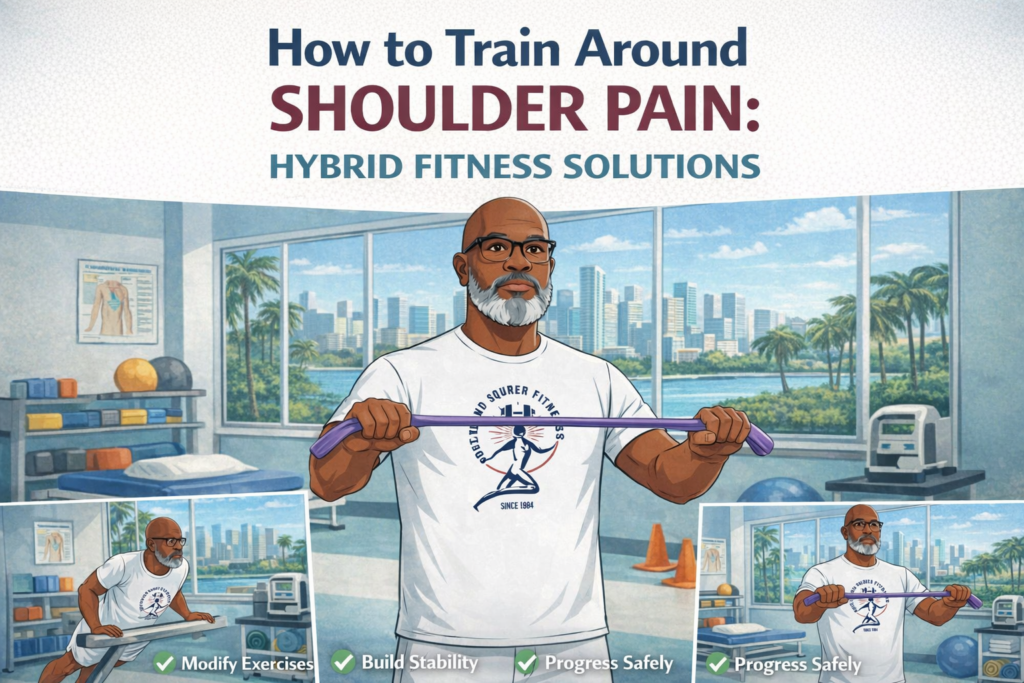

Shoulder pain can interrupt your routine, but it doesn’t have to shut it down. Many people search for ways to train around shoulder pain because they want to stay active, build strength, and maintain their endurance—even when their shoulders feel stiff, irritated, or unstable. Fortunately, a smart hybrid fitness approach makes it possible to keep training safely while protecting your joints.
This guide breaks down how to train around shoulder pain using strength, endurance, mobility, and functional movement. You’ll learn how to modify exercises, build stability, and follow a progression matrix designed for both beginners and intermediates. Whether you use dumbbells, kettlebells, resistance bands, or bodyweight, you’ll find simple ways to stay consistent without making your problem shoulder worse.
Understanding Shoulder Pain: Causes and Training Considerations
Shoulder pain is extremely common, especially in active people. Because the shoulder relies on a delicate balance of mobility and stability, even small imbalances can create discomfort. Overuse, poor posture, and technique errors often contribute to irritation.
Common causes include:
- Rotator cuff tendinopathy
- Impingement syndrome
- Bursitis or inflammation
- Muscle imbalances and weak scapular stabilizers
- Overhead lifting with poor form
Although most mild to moderate cases respond well to exercise therapy, sudden weakness, severe pain, swelling, or an inability to lift your arm requires medical attention. According to research published in PLOS One, targeted exercise therapy can significantly reduce shoulder pain and improve function for up to a year.
Why Hybrid Fitness Works for Shoulder Pain
Hybrid fitness blends strength and endurance training into one efficient session. This approach is ideal for people managing shoulder pain because it allows for variety, joint-friendly modifications, and balanced muscle development.
Benefits of hybrid training include:
- Meeting strength and cardio goals in less time
- Reducing joint stress through movement variety
- Supporting weight management and metabolic health
- Encouraging balanced muscle development and injury prevention
A review in Circulation found that combined aerobic and resistance training produced the greatest improvements in blood pressure, cholesterol, and blood sugar. Hybrid routines deliver similar benefits while keeping sessions efficient and adaptable.
Principles of Training Around Shoulder Pain
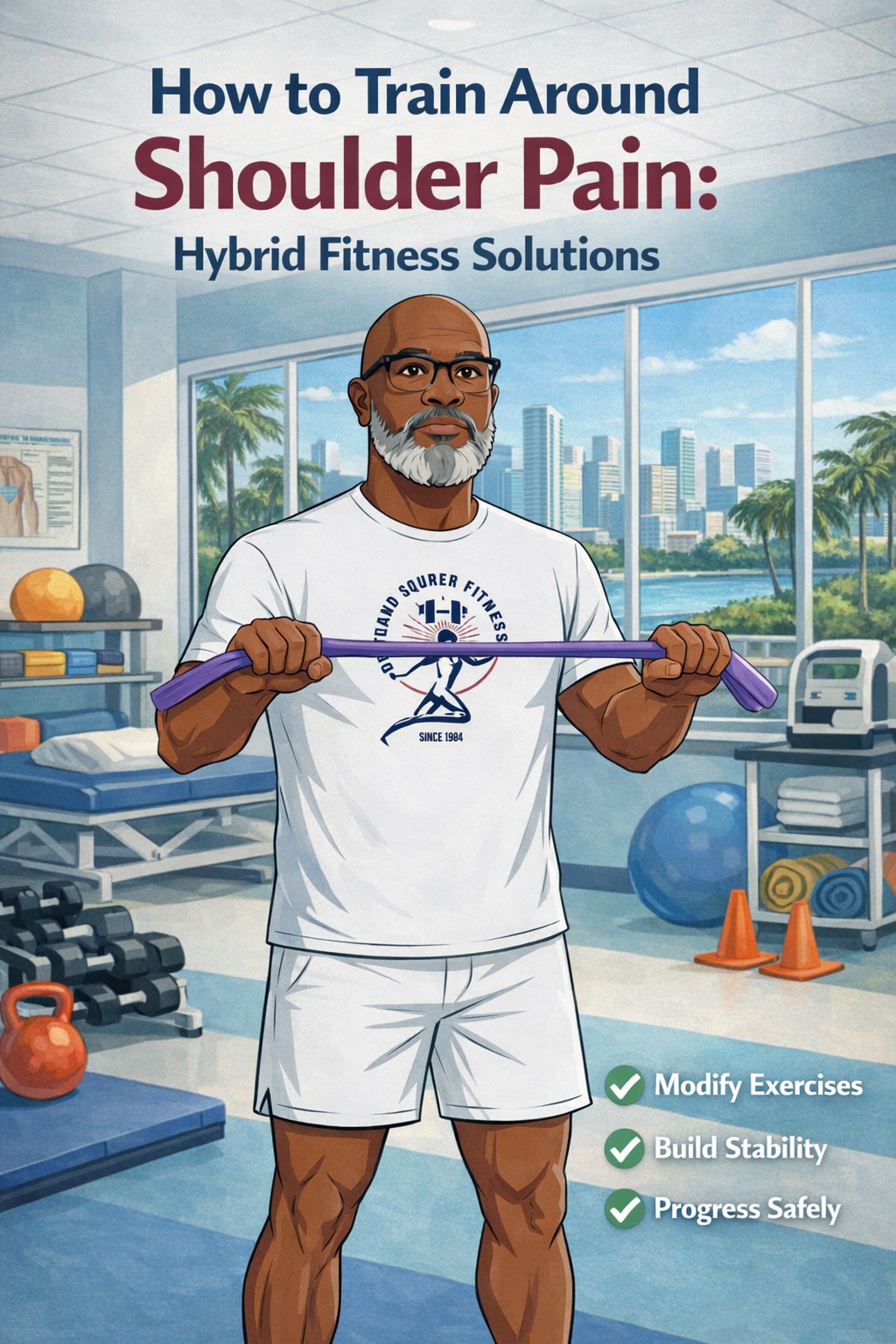
Training around shoulder pain requires intention and awareness. These principles help you stay safe while still making progress.
-
Prioritize Pain‑Free Movement
Avoid pushing through sharp or worsening pain. Mild stretching discomfort is normal, but anything that feels “wrong” should be modified or skipped.
-
Build Scapular Stability
Strong shoulder blades support healthy shoulder mechanics. Exercises that target the serratus anterior, trapezius, and rhomboids help reduce strain on the joint.
-
Use a Hybrid Approach
Alternate between upper body, lower body, core, and cardio. This keeps your heart rate up while reducing repetitive stress on the shoulder.
-
Progress Gradually
Increased resistance, range of motion, or complexity only when movements feel stable and controlled.
-
Listen to Your Body
If pain increases or you notice swelling, numbness, or weakness, stop and reassess.
Safe Exercise Modifications for Shoulder Pain
You don’t need to eliminate your favorite exercises—just adjust them.
Dumbbells
- Use lighter weights and higher reps
- Choose neutral-grip pressing variations
- Replace overhead presses with incline presses or front raises
Kettlebells
- Bottom-up presses improve stability with lighter loads
- Turkish get-ups and windmills build mobility and control
Resistance Bands
- Ideal for external rotation, rows, and face pulls
- Great for scapular retraction and rotator cuff activation
Calisthenics
- Wall slides, scapular push-ups, and YTWL series strengthen stabilizers
- Incline or knee push-ups reduce shoulder load
Lower‑Body Strength & Cardio
- Step-ups, box squats, and stair walking build endurance without stressing the shoulders
Mobility & Flexibility
- Pendulum swings, cross-body stretches, and doorway stretches restore range of motion
Core & Functional Training
- Dead bugs, glute bridges, and Pallof presses build stability without aggravating the shoulder
The Progression Matrix: Hybrid Shoulder‑Friendly Workout
Below is a hybrid fitness routine designed for people training around shoulder pain. It includes beginner and intermediate levels with clear definitions and characteristics.
Beginner Level
Definition:
For those new to exercise, returning after a break, or managing significant shoulder discomfort.
Characteristics:
- Low resistance (bodyweight or light bands/dumbbells)
- Controlled tempo (2-3 seconds per rep)
- Emphasis on mobility, stability, and endurance
- 2-3 sets, 10–15 reps, 30–60 seconds rest
Intermediate Level
Definition:
For those with training experience, mild or well-managed shoulder pain, and good movement control.
Characteristics:
- Moderate resistance (heavier bands, moderate dumbbells/kettlebells)
- Increased range of motion and exercise variety
- 3—4 sets, 8—12 reps, 30—45 seconds rest
Progression Matrix Table
| Exercise Type | Beginner Example | Intermediate Example | Muscles Worked / Stabilizers |
| Mobility/Flexibility | Pendulum swing, cross‑body stretch | Thread the needle, open‑book stretch | Deltoids, rotator cuff, rhomboids |
| Scapular Stability | Wall slide, scapular retraction | YTWL series, banded external rotation | Serratus anterior, trapezius, rotator cuff |
| Strength (Upper Body) | Incline push‑up, band row | Neutral‑grip dumbbell press, bottoms‑up KB press | Pecs, deltoids, triceps, scapular stabilizers |
| Strength (Lower Body) | Step‑up, chair squat | Bulgarian split squat, box squat | Glutes, quads, hamstrings, core |
| Core/Functional | Dead bug, glute bridge | Pallof press, kettlebell deadlift | Rectus abdominis, obliques, glutes |
| Cardio/Endurance | Walking, light stair climb | Light jogging, interval step‑ups | Heart, lungs, stabilizers |
| Plyometrics | Low step tap, gentle box squat | Box step‑over, stair intervals | Glutes, quads, calves, core |
Sample Hybrid Circuit (Beginner)
- Pendulum swing — 30 sec each arm
- Wall slide — 10 reps
- Incline push‑up — 10 reps
- Step‑up — 10 reps per leg
- Dead bug — 10 reps per side
- Walking — 2–5 minutes
Repeat 2–3 rounds.
Sample Hybrid Circuit (Intermediate)
- Thread the needle — 30 sec per side
- YTWL series — 8 reps each
- Neutral‑grip dumbbell press — 10 reps
- Bulgarian split squat — 8 reps per leg
- Pallof press — 10 reps per side
- Light jogging or interval step‑ups — 2–5 minutes
Repeat 3–4 rounds.
Muscles Worked and Stabilizers
Primary Movers:
- Deltoids
- Pectorals
- Triceps and biceps
- Glutes, quads, hamstrings
Stabilizers:
- Rotator cuff
- Serratus anterior
- Trapezius
- Rhomboids
- Core musculature
Strong stabilizers protect the shoulder joint and support pain‑free movement.
Safety Tips, Red Flags, and When to Seek Help
Safety First
- Warm up with gentle cardio and dynamic stretching
- Move slowly and with control
- Avoid sharp or radiating pain
- Progress gradually
- Stay hydrated
Red Flags
Stop and seek medical advice if you experience:
- Sudden inability to lift your arm
- Severe pain, swelling, or redness
- Numbness or tingling
- Pain that worsens after 2 weeks
Summary
Training around shoulder pain is not only possible—it’s often the smartest way to stay strong, mobile, and consistent. A hybrid fitness approach blends strength, endurance, mobility, and core work into a routine that supports recovery while still delivering results.
Hybrid workouts help you:
- Maintain strength and cardio without stressing the shoulder
- Improve scapular stability and rotator cuff function
- Stay active with safe, joint-friendly modifications
- Progress at your own pace using a structured matrix
With the right strategy, you can protect your shoulder, stay consistent, and keep moving forward.
FAQs
- Can I still build muscle and endurance with shoulder pain?
Yes. Lower-body, core, and pain-free upper-body exercises help you maintain and even improve strength and endurance.
- What are the best shoulder‑friendly strength exercises?
Wall slides, branded rows, neutral-grip presses, bottom-up kettlebell presses, and scapular retraction drills.
- How often should I train?
Aim for 2-4 hybrid sessions per week with rest days between strength workouts.
- When should I see a doctor?
Seek help if you experience severe pain, swelling, numbness, or symptoms lasting more than two weeks.
- Are resistance bands enough?
Absolutely. Bands are safe, effective, and ideal for shoulder-friendly training.
- Is cardio safe with shoulder pain?
Yes. Walking, light jogging, cycling, and stair climbing are excellent options.
Calls to Action
- Shoulder Mobility Tips — Hybrid Fitness for Chronic Knee Pain: Beginner Solutions.
- Hybrid Cardio Workouts — Low-Impact Strength Training for Joint Pain Relief.
ESF Safety Disclaimer
Always consult your physician or a qualified healthcare provider before starting any new exercise program, especially if you have an injury or persistent pain. The information provided here is for educational purposes only and is not a substitute for professional medical advice, diagnosis, or treatment. Stop any exercise that causes sharp pain, swelling, or loss of function, and seek medical attention as needed.
Smart tools, human guidance — straightforward, simple, effective, and fun.