

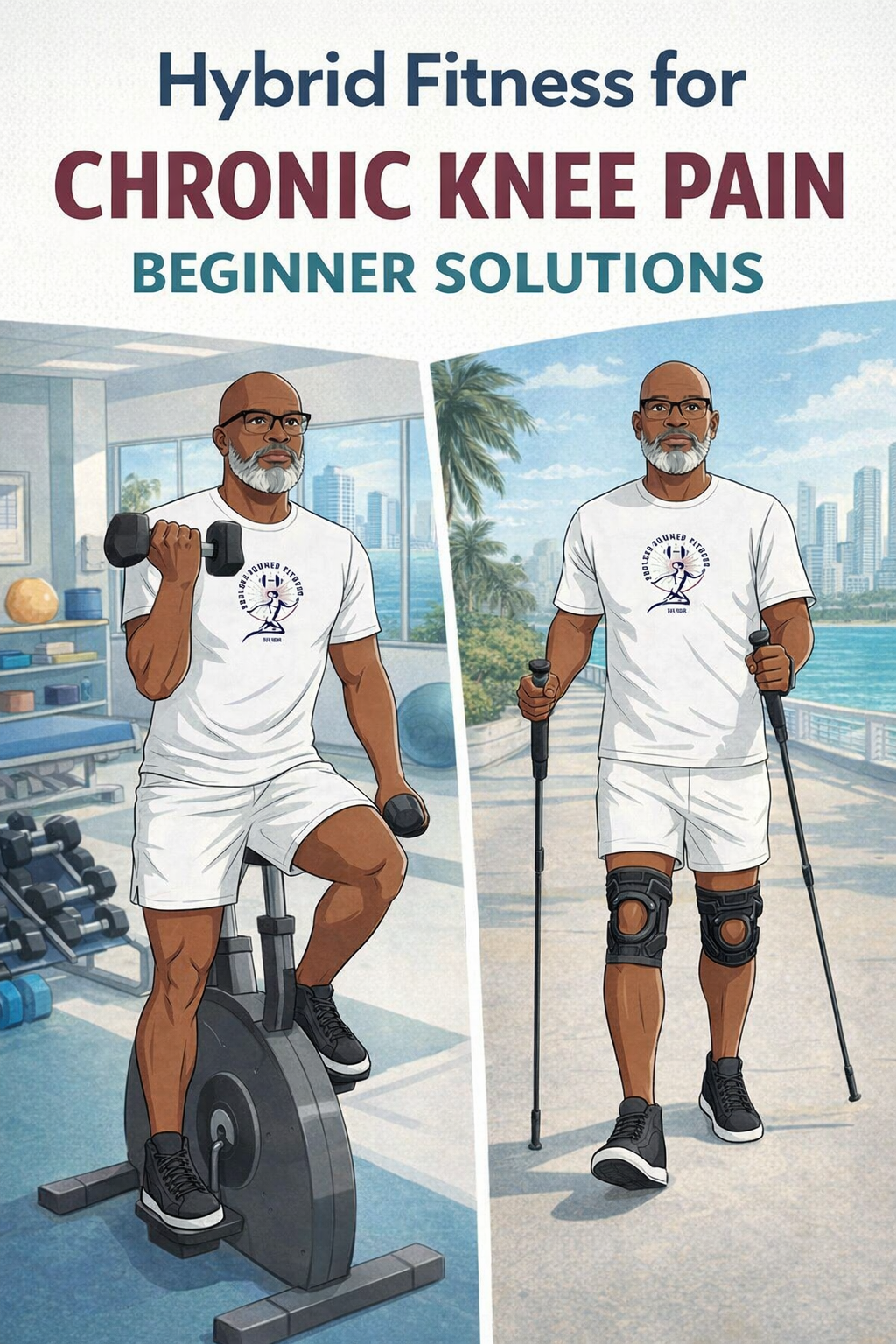
Chronic knee pain can make starting a new routine feel intimidating, but hybrid fitness for chronic knee pain offers a safe, beginner-friendly path forward. Hybrid fitness blends strength and cardio in a balanced way to support joint health, reduce pain, and improve mobility. With the right approach, you can build confidence, strengthen your knees, and move with less discomfort.
What Is Hybrid Fitness?
Hybrid fitness combines two essential training styles: strength work and cardiovascular exercise. Instead of choosing one or the other, hybrid programs alternate or blend both to improve muscle strength, endurance, and overall function. This approach is especially helpful for beginners managing chronic knee pain because it strengthens the muscles that support the knees while keeping cardio low-impact and joint-friendly.
You don’t need intense boot camps or complicated routines. A simple hybrid plan might include two days of gentle strength training and two days of low-impact cardio, such as cycling or swimming. This balance helps prevent overuse injuries and keeps your workouts enjoyable.
Learn how to start a hybrid fitness program: Hybrid Fitness for Real Life: A Beginner’s Guide
Why Exercise Matters for Chronic Knee Pain
Many beginners worry that exercise will make knee pain worse. However, research consistently shows the opposite. Regular movement reduces pain, improves function, and slows the progression of knee osteoarthritis.
Exercise helps by:
- Strengthening the quadriceps, hamstrings, and glutes
- Improving joint lubrication through synovial fluid circulation
- Enhancing alignment and stability
- Increasing flexibility and blood flow
- Supporting weight control, which reduces knee load
A 2025 network meta-analysis in the BMJ found that aerobic exercise—such as walking, cycling, or swimming—provided the greatest improvements in pain and function for people with knee osteoarthritis. Strength and hybrid training also delivered significant benefits when performed consistently.
Peer-Reviewed Reference:
Safe Hybrid Fitness Programming for Knee Pain
Choosing the Right Exercises
The best hybrid fitness routines for chronic knee pain focus on low-impact, joint-friendly movements.
Low-Impact Cardio
- Cycling (stationary or outdoor)
- Swimming or water aerobics
- Elliptical training
- Walking on flat surfaces
Strength Training
- Straight leg raises
- Glute bridges
- Mini squats or sit-to-stand
- Low step-ups
- Seated knee extensions (limited range)
Mobility and Balance
- Gentle stretching for hamstrings, calves, and quads
- Balance drills like single-leg stands or side steps

What to Avoid
- Deep squats or lunges
- High-impact activities
- Heavy leg extensions
- Twisting or rapid direction changes
Stop immediately if you feel sharp pain, swelling, or instability.
Evidence-Based Guidelines: How Much and How Often?
According to the American College of Sports Medicine (ACSM), people with chronic knee pain or osteoarthritis benefit from:
Aerobic Exercise
150 minutes per week of moderate, low-impact cardio.
Strength Training
2—3 sessions per week targeting major muscle groups.
Flexibility and Balance
Stretching and balance work most days of the week.
Progression
Start slowly and increase gradually based on comfort.
Peer-Reviewed Reference:
ACSM Exercise Guidelines for Osteoarthritis
Sample Hybrid Fitness Week for Beginners
| Day | Activity | Focus | Duration | Notes |
| Monday | Cycling + strength | Cardio + quads/glutes | 20 + 15 min | Leg raises, bridges |
| Tuesday | Stretching | Flexibility | 10–15 min | Hamstrings, quads, calves |
| Wednesday | Walking + balance | Cardio + neuromotor | 20 + 10 min | Side steps, marching |
| Thursday | Water aerobics | Recovery/cardio | 20–30 min | Pool-based |
| Friday | Strength training | Lower body | 20 min | Mini squats, step-ups |
| Saturday | Yoga | Flexibility/balance | 20 min | Knee-friendly poses |
| Sunday | Optional walk/cycle | Cardio | 20–30 min | Low intensity |
Pain Monitoring and Self-Management Strategies
How to Monitor Pain Safely
- Keep pain at or below 5/10 during exercise
- Reduce intensity if pain lasts more than 24 hours
- Modify movements or reduce the range of motion
- Use rest, stretching, ot ice as needed
When to Seek Help
Stop and consult a professional if you experience:
- Sudden severe pain
- Swelling or redness
- Locking or catching
- Difficulty bearing weight
Peer-Reviewed Reference:
J Orthop Sports Phys Ther 2025;55(8):1–9
Integrating Physical Therapy and Professional Support
A physical therapist can assess your movement patterns, identify imbalances, and teach safe, effective exercises tailored to your needs. Early referral improves outcomes and reduces reliance on medication.
Internal Link Placeholder:
[Find a certified physical therapist near you.]
Safety Tips and Contraindications
- Warm up to 5—10
- Wear supportive footwear
- Avoid deep knee bends
- Progress gradually
- Listen to your body
- Get medical clearance if needed
Hybrid Fitness: Real-World Success and Motivation
Hybrid fitness is sustainable, adaptable, and effective for people with chronic knee pain. Studies show that combining strength and cardio improves body composition, cardiovascular health, and daily function. With patience and consistency, you’ll build strength, reduce pain, and regain confidence.
Summary
Hybrid fitness is a beginner-friendly, evidence-based approach for managing chronic knee pain. By blending low-impact cardio and strength training, you can strengthen the muscles that support your knees, improve mobility, and boost overall health.
Key takeaways include:
- Hybrid fitness balances strength and endurance
- Low-impact cardio is safe and effective
- Strengthening quads, glutes, and hamstrings reduces knee stress
- Gradual progression prevents flare-ups
- Consistency builds long-term success
Hybrid fitness empowers you to take control of your knee health and move with confidence.
FAQs
- Can I do hybrid fitness if I have chronic knee pain?
Yes. Focus on low-impact cardio and gentle strength work. Avoid sharp pain. - What are the best cardio options?
Cycling, swimming, water aerobics, and flat-surface walking. - How often should I exercise?
Aim for 150 minutes of cardio weekly plus 2–3 strength sessions. - Are squats safe?
Mini squats or sit-to-stand movements are generally safe. - When should I see a doctor?
Seek help for severe pain, swelling, locking, or instability. - Can hybrid fitness help with weight loss?
Yes. Strength + cardio supports healthy weight management.
Safety Disclaimer
The information in this article is for general education only and does not replace medical advice. Consult a qualified healthcare professional before starting any new exercise program, especially if you have knee pain or a medical condition. Stop exercising if you experience sharp pain, swelling, or concerning symptoms.
Calls to Action
- The Science Behind Hybrid Fitness Training
- Explore our hybrid fitness video library for more beginner routines
Smart tools, human guidance — straightforward, simple, effective, and fun.