Endless Summer Fitness provides workout tips for fitness beginners, weekend warriors, post-physical therapy individuals, men and women in middle life, and anyone seeking fitness results.
Low-Impact Strength Training for Joint Pain Relief

Low-Impact Strength Training for Joint Pain Relief

Low-impact strength training for joint pain relief is one of the safest and most effective ways to rebuild strength without irritating sensitive knees, hips, or shoulders. This style of training focuses on slow, controlled movements that protect your joints while improving muscle tone and mobility, and endurance. Because hybrid fitness blends strength and low-impact conditioning. It becomes a powerful tool for long-term joint health.

Why Low-Impact Strength Training Helps Joint Pain

Low-Impact Strength Training for Joint Pain Relief

 Low-impact strength work reduces stress on cartilage and connective tissue. Instead of pounding your joints with jumps or heavy loads, you use resistance bands, light weights, and bodyweight movements. According to the American College of Sports Medicine (ACSM), controlled resistance improves joint stability, circulation, and neuromuscular control—all essential for reducing pain and stiffness.

Additionally, the National Strength and Conditioning Association (NSCA) notes that low-impact resistance training supports better posture and movement mechanics. When your muscles fire correctly, your joints absorb less stress during daily activities.

Key Principles for Joint-Friendly Training

To get the most out of high-impact strength training, follow these simple guidelines:

  1. Slow, Controlled Reps

Moving slowly reduces joint strain and increases muscle activation. This helps you build strength without aggravating pain.

  1. Full Range of Motion

Gentle mobility work keeps joints lubricated and improves flexibility. Over time, this reduces stiffness and improves movement quality.

  1. Progressive Resistance

Start light and increase tension gradually. Resistance bands, light dumbbells, and kettlebells are ideal for safe progression.

  1. Active Recovery

Walking, stretching, and light mobility sessions help reduce inflammation and support long-term joint health.

These principles align with evidence-based recommendations from ACSM and NSCA for safe,  sustainable strength development.

Example Low-Impact Exercise for Joint Pain Relief

Below is one example of a low-impact strength exercise you can use today. It’s joint-friendly, beginner-safe, and fits perfectly into a hybrid fitness routine.

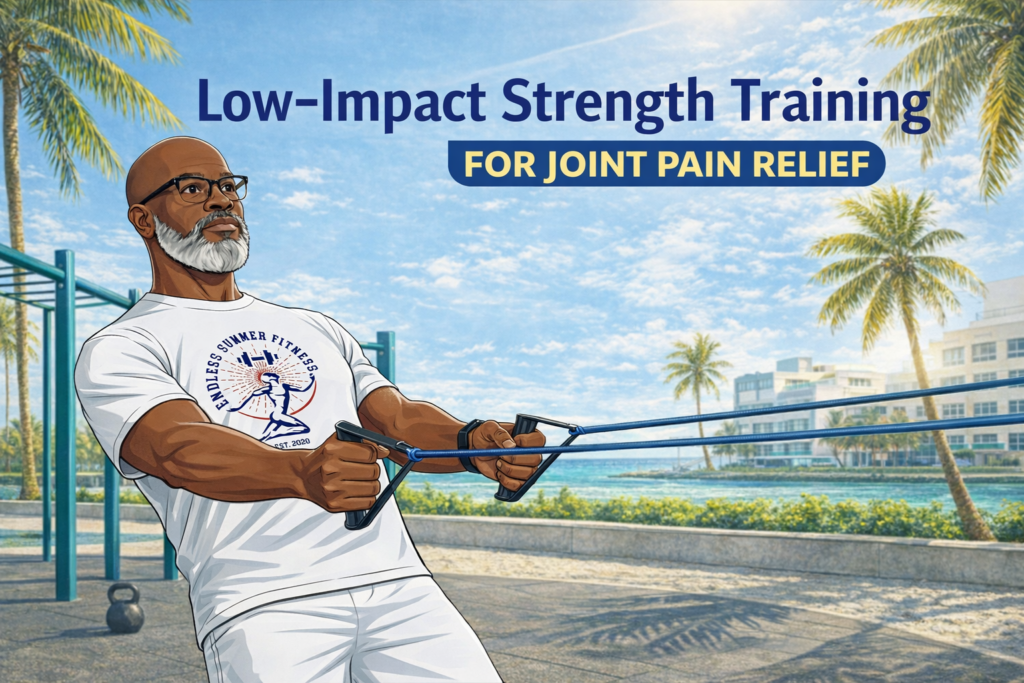
Resistance Band Row (Example Exercise)

Why it works: Strengthens your back and shoulders without loading your knees or spine. Helps improve posture and reduce upper-body tension.

How to do it:

  • Loop a resistance band around a sturdy anchor
  • Stand tall with feet hip-width apart
  • Pull the band toward your ribs while keeping your elbows close.
  • Squeeze your shoulder blades together.
  • Return slowly with control.

Muscles worked: lats, rhomboids, biceps
Stabilizers: core, shoulders

This single exercise can be repeated 2-3 times per week as part of a low-impact routine.

Calls to Action

Summary

Low-impact strength training for joint pain relief helps you stay active without irritating sensitive joints. By focusing on slow, controlled movements and progressive resistance, you can build strength safely and consistently.

This approach improves mobility, reduces inflammation, and supports long-term joint health. Hybrid fitness makes the process even more effective by blending strength, endurance, and mobility into one balanced system.

Whether you’re recovering from discomfort or simply want a safe training style, low-impact strength work is a smart, sustainable solution.

FAQs

  1. Can low-impact training still build muscle?
    Yes. Controlled resistance stimulates muscle growth without stressing your joints.
  2. How often should I train?
    Aim for 3–4 sessions per week with mobility work between strength days.
  3. What equipment is best?
    Resistance bands, light dumbbells, and kettlebells are ideal for joint-friendly training.
  4. Is this safe for arthritis?
    Yes, when performed with proper form. Always consult a healthcare provider first.
  5. How long until I feel relief?
    Most people notice improvements within 2–4 weeks.
Disclosure

Always consult your physician before starting any exercise program. Endless Summer Fitness articles are for educational purposes only and not a substitute for medical advice.

Smart tools, human guidance — straightforward, simple, effective, and fun.

Low-impact strength training for joint pain relief is one of the safest and most effective ways to rebuild strength without irritating sensitive knees, hips, or shoulders. This style of training focuses on slow, controlled movements that protect your joints while improving muscle tone and mobility, and endurance. Because hybrid fitness blends strength and low-impact conditioning. It becomes a powerful tool for long-term joint health.

Why Low-Impact Strength Training Helps Joint Pain

Low-Impact Strength Training for Joint Pain Relief

 Low-impact strength work reduces stress on cartilage and connective tissue. Instead of pounding your joints with jumps or heavy loads, you use resistance bands, light weights, and bodyweight movements. According to the American College of Sports Medicine (ACSM), controlled resistance improves joint stability, circulation, and neuromuscular control—all essential for reducing pain and stiffness.

Additionally, the National Strength and Conditioning Association (NSCA) notes that low-impact resistance training supports better posture and movement mechanics. When your muscles fire correctly, your joints absorb less stress during daily activities.

Key Principles for Joint-Friendly Training

To get the most out of high-impact strength training, follow these simple guidelines:

  1. Slow, Controlled Reps

Moving slowly reduces joint strain and increases muscle activation. This helps you build strength without aggravating pain.

  1. Full Range of Motion

Gentle mobility work keeps joints lubricated and improves flexibility. Over time, this reduces stiffness and improves movement quality.

  1. Progressive Resistance

Start light and increase tension gradually. Resistance bands, light dumbbells, and kettlebells are ideal for safe progression.

  1. Active Recovery

Walking, stretching, and light mobility sessions help reduce inflammation and support long-term joint health.

These principles align with evidence-based recommendations from ACSM and NSCA for safe,  sustainable strength development.

Example Low-Impact Exercise for Joint Pain Relief

Below is one example of a low-impact strength exercise you can use today. It’s joint-friendly, beginner-safe, and fits perfectly into a hybrid fitness routine.

Resistance Band Row (Example Exercise)

Why it works: Strengthens your back and shoulders without loading your knees or spine. Helps improve posture and reduce upper-body tension.

How to do it:

  • Loop a resistance band around a sturdy anchor
  • Stand tall with feet hip-width apart
  • Pull the band toward your ribs while keeping your elbows close.
  • Squeeze your shoulder blades together.
  • Return slowly with control.

Muscles worked: lats, rhomboids, biceps
Stabilizers: core, shoulders

This single exercise can be repeated 2-3 times per week as part of a low-impact routine.

Calls to Action

Summary

Low-impact strength training for joint pain relief helps you stay active without irritating sensitive joints. By focusing on slow, controlled movements and progressive resistance, you can build strength safely and consistently.

This approach improves mobility, reduces inflammation, and supports long-term joint health. Hybrid fitness makes the process even more effective by blending strength, endurance, and mobility into one balanced system.

Whether you’re recovering from discomfort or simply want a safe training style, low-impact strength work is a smart, sustainable solution.

FAQs

  1. Can low-impact training still build muscle?
    Yes. Controlled resistance stimulates muscle growth without stressing your joints.
  2. How often should I train?
    Aim for 3–4 sessions per week with mobility work between strength days.
  3. What equipment is best?
    Resistance bands, light dumbbells, and kettlebells are ideal for joint-friendly training.
  4. Is this safe for arthritis?
    Yes, when performed with proper form. Always consult a healthcare provider first.
  5. How long until I feel relief?
    Most people notice improvements within 2–4 weeks.
Disclosure

Always consult your physician before starting any exercise program. Endless Summer Fitness articles are for educational purposes only and not a substitute for medical advice.

Smart tools, human guidance — straightforward, simple, effective, and fun.

Leave a Comment

Your email address will not be published. Required fields are marked *

Scroll to Top
Scroll to Top
Verified by MonsterInsights