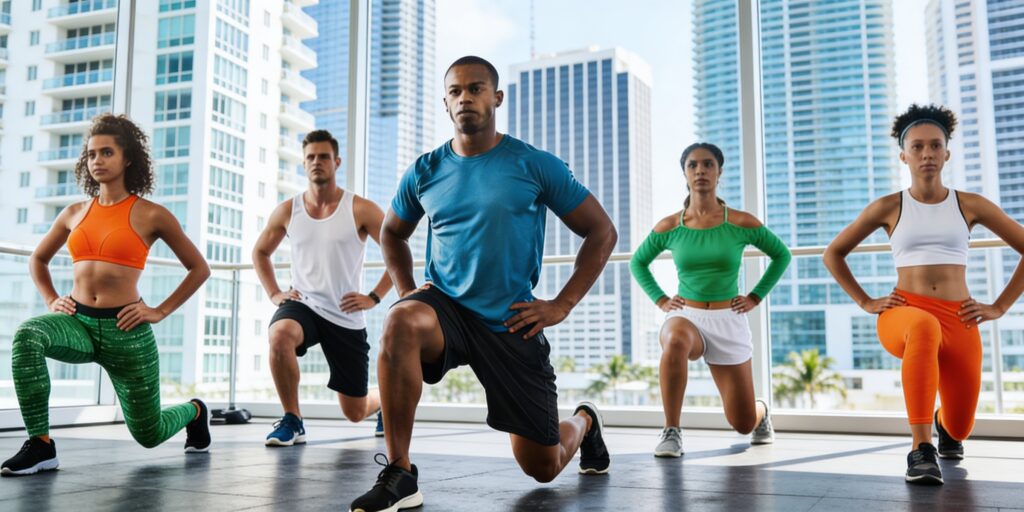

Low-Impact Lower Body Strength Training for Hybrid Athletes
If you want stronger legs without joint stress, Low-Impact Lower Body Strength Training is the perfect hybrid fitness solution. This training style blends strength, endurance, and mobility while keeping your knees, hips, and ankles feeling smooth. Because the movements are controlled and intentional, you build real strength without the pounding that usually comes with traditional leg day. And since it’s low impact, you can train consistently, recover faster, and stay active without burnout.
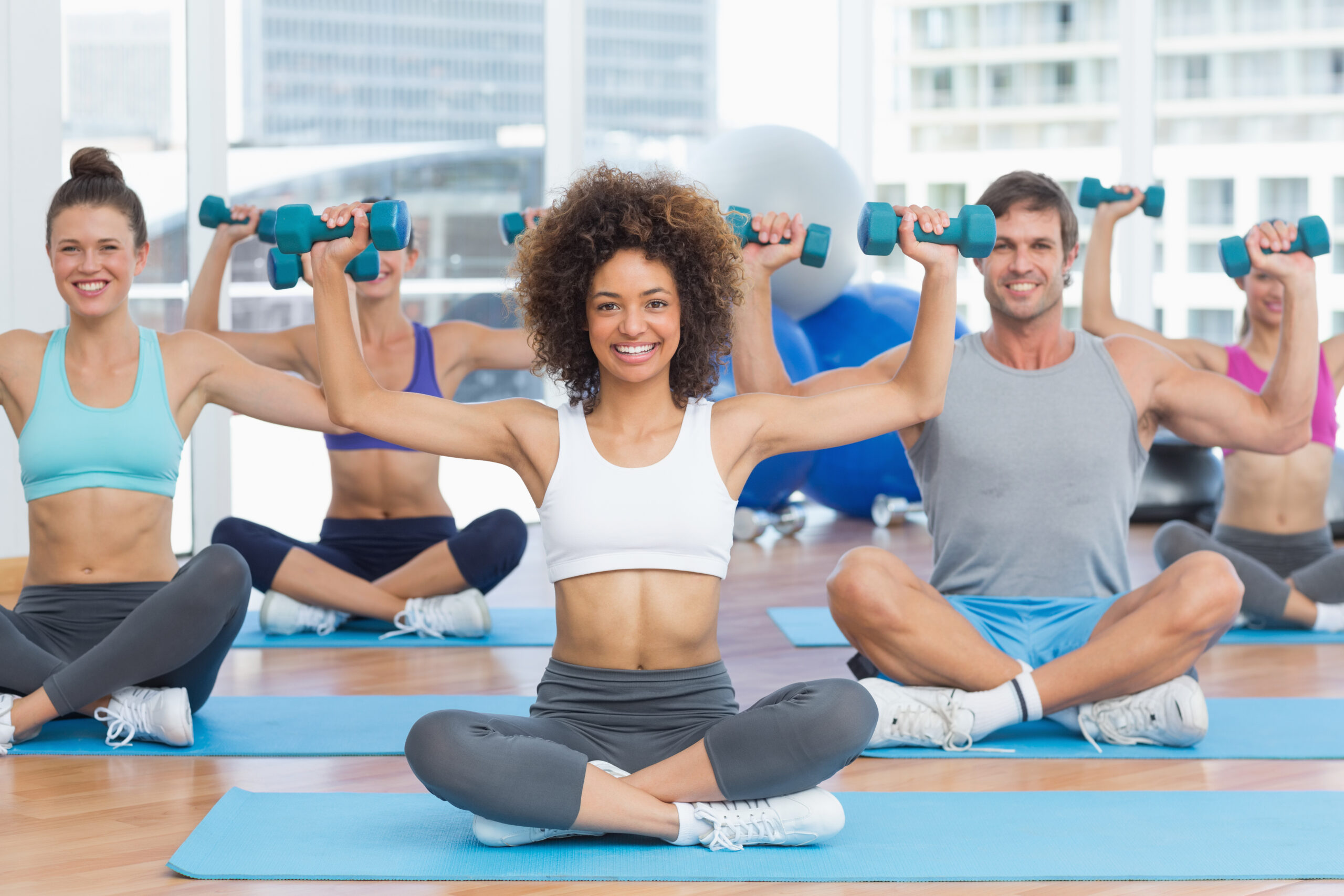
Low-impact training isn’t “easy.” Controlled resistance improves muscular strength and joint stability. Low-impact modalities help maintain proper alignment and reduce the risk of injury. Harvard Health Publishing states that hybrid fitness is an effective, heart-rate-guided training approach that supports endurance without overloading the body. When you combine these principles, you get a hybrid approach that builds strength and stamina simultaneously.
Why Low-Impact Lower Body Strength Training Works
Low-impact training focuses on control, tempo, and joint-friendly mechanics. Instead of jumping off, loading your joints aggressively, you use resistance bands, dumbbells, kettlebells, and bodyweight to safely challenge your muscles.
Key Benefits
- Stronger legs without joint pain
- Better balance and stability
- Improved muscular endurance
- Hybrid-friendly pacing
- Faster recovery and less soreness
This is the kind of training that keeps you moving well—whether you’re walking the beach, climbing stairs, or building your hybrid fitness base.
The Foundations of Low-Impact Lower Body Strength Training
Low-impact lower body strength training uses slow, controlled movements that load the legs without compressing the joints. You’ll still challenge your quads, hamstrings, glutes, calves, and core—just in a safer, more sustainable way.
Core Movement Patterns
- Squats
- Hip hinges
- Lunges
- Step patterns
- Glute bridges
- Lateral movements
- Balance and stability drills
These patterns create a strong foundation for hybrid fitness, where strength and endurance work together.
How to Train Low-Impact the Right Way
To get the most out of low-impact lower body strength training, focus on:
- Tempo Control
Use a 2-3 second lowering phase to increase time under tension.
- Stable Foot Positions
Avoid sudden impact or unstable landings.
- Full Range of Motion
Move through your natural mobility without forcing depth.
- Breath Control
Exhale on exertion, inhale on the lowering phase.
- Hybrid Pacing
Blend strength and endurance by keeping rest periods moderate.
Best Low-Impact Exercises for Lower Body Strength
These exercises are joint-friendly but still deliver serious results.
Band-Resisted Squats
Great for activating quads and glutes without heavy loading.
Step-Back Lunges
Easier on the knees than forward lunges.
Glute Bridges
Targets glutes and hamstrings with minimal joint stress.
Kettlebell Deadlifts
Builds posterior chain strength with controlled movement.
Lateral Band Walks
Strengthens hip stabilizers and improves knee alignment.
Hybrid Fitness Benefits of Low-Impact Training
Low-impact lower body strength training supports hybrid fitness by improving muscular endurance, cardiovascular efficiency, and movement quality. You recover faster, stay consistent, and build strength without sacrificing mobility.
This is the kind of training that lets you stay active year-round—Miami style.
INTERMEDIATE LEVEL
Definition: You’re comfortable with basic form, ready for moderate weights, and able to maintain control through full ranges of motion.
Characteristics: Moderate load, hybrid pacing, controlled tempo, and clean technique.
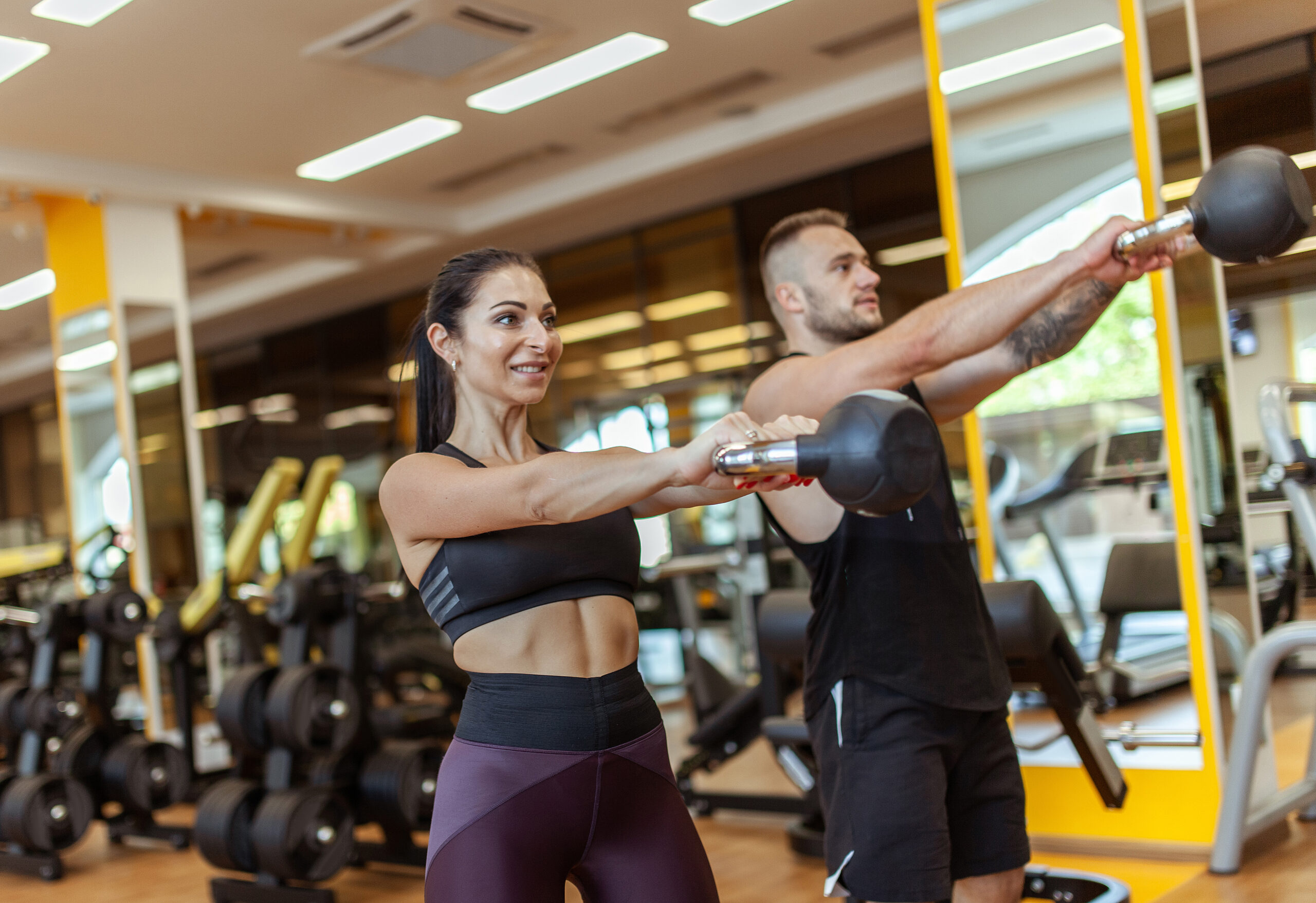
INTERMEDIATE LOW-IMPACT LOWER BODY STRENGTH TRAINING ROUTINE
Perform 3–4 sets per exercise. Rest 60–90 seconds between sets.
-
Dumbbell Goblet Squat — 10–12 reps
Muscles Worked: Quads, glutes, adductors
Stabilizers: Core, spinal erectors
Detailed Instructions:
- Stand with feet shoulder-width apart, holding a dumbbell vertically at your chest.
- Keep your elbows close to your body and brace your core.
- Sit your hips back slightly, then bend your knees to lower into a squat.
- Keep your chest lifted and knees aligned with your toes.
- Pause at the bottom for one second.
- Drive through your heels to stand tall without locking your knees.
Low-Impact Tip: Move slowly and avoid bouncing at the bottom.
-
Kettlebell Deadlift — 10–12 reps
Muscles Worked: Hamstrings, glutes, lower back
Stabilizers: Core, lats, traps
Detailed Instructions:
- Place a kettlebell between your feet. Stand with feet hip-width apart.
- Push your hips back while keeping your spine neutral.
- Bend your knees slightly and reach down to grab the kettlebell handle.
- Brace your core and squeeze your lats.
- Stand up by driving your hips forward and squeezing your glutes.
- Lower the kettlebell with control, keeping it close to your body.
Low-Impact Tip: Keep the movement slow and avoid rounding your back.
-
Reverse Lunges with Dumbbells — 8–10 reps per side
Muscles Worked: Quads, glutes, hamstrings
Stabilizers: Hip stabilizers, core
Detailed Instructions:
- Stand tall with dumbbells at your sides.
- Step one foot back into a long lunge.
- Lower your back knee toward the floor while keeping your front knee aligned.
- Keep your torso upright and core engaged.
- Push through your front heel to return to standing.
- Alternate sides with control.
Low-Impact Tip: Step back farther to reduce knee pressure.
-
Lateral Band Walks — 20 steps total
Muscles Worked: Glute medius, glute minimus
Stabilizers: Obliques, hip stabilizers
Detailed Instructions:
- Place a resistance band above your knees or around your ankles.
- Stand with feet hip-width apart and slight bend in your knees.
- Step to the side while keeping tension on the band.
- Keep your hips level and avoid leaning.
- Take 10 steps in one direction, then 10 steps back.
Low-Impact Tip: Move slowly and maintain constant band tension.
Calls to Action
- Read Next: Outdoor Mobility Routines
- Also Try: Low-Impact HIIT for Beginners: Burn Fat Without the Joint Pain
SUMMARY
Low-impact lower body strength training gives you the strength you want without the joint stress you don’t. It’s a hybrid-friendly approach that blends endurance, mobility, and stability into one smooth, sustainable routine. Because the movements are controlled and intentional, you build real strength while protecting your knees, hips, and ankles.
This style of training also supports long-term consistency. You recover faster, feel better, and stay active without burnout. Whether you’re walking, jogging, or strength training, low-impact work keeps your body moving well.
Hybrid fitness thrives on sustainability, and low-impact training is exactly that. You get stronger, feel more stable, and move with confidence—all while keeping your joints happy,
FAQs
- Is low-impact lower-body strength training good for people with knee sensitivity?
Yes. The controlled tempo and stable positions reduce joint compression.
- Can I build muscle with low-impact training?
Absolutely. Slow tempo and moderate load stimulate hypertrophy.
- How often should I train my lower body?
Two to three sessions per week work well for most people.
- Should I use heavy weights for low-impact training?
Moderate weights are ideal. Focus on control, not max load.
- Can I pair this with cardio?
Yes — hybrid fitness blends strength and endurance beautifully.
DISCLOSURE
This article is for educational purposes only and is not a substitute for professional medical advice. Always consult a qualified health provider before starting any new exercise program.
Smart tools, human guidance — straightforward, simple, effective, and fun.