Endless Summer Fitness provides workout tips for fitness beginners, weekend warriors, post-physical therapy individuals, men and women in middle life, and anyone seeking fitness results.

Low-Impact HIIT for Beginners: Burn Fat Without the Joint Pain

How Low-Impact HIIT Helps You Burn Fat Without Joint Stress

Low-Impact HIIT for Beginners: Starting a low-impact HIIT workout is one of the safest ways to burn fat without stressing your joints. Many new exercisers want results but feel intimidated by high-impact moves like jump squats or burpees. This guide breaks everything down into simple steps so you can build strength, improve endurance, and stay consistent without pain.

Low-impact HIIT still delivers intensity. However, it keeps your feet grounded, which reduces joint stress while still elevating your heart rate. Because of this, beginners can train confidently and build a strong foundation for future progress.
Low-Impact HIIT for Beginners: Burn Fat Without the Joint Pain


Why Low-Impact HIIT Works for Beginners

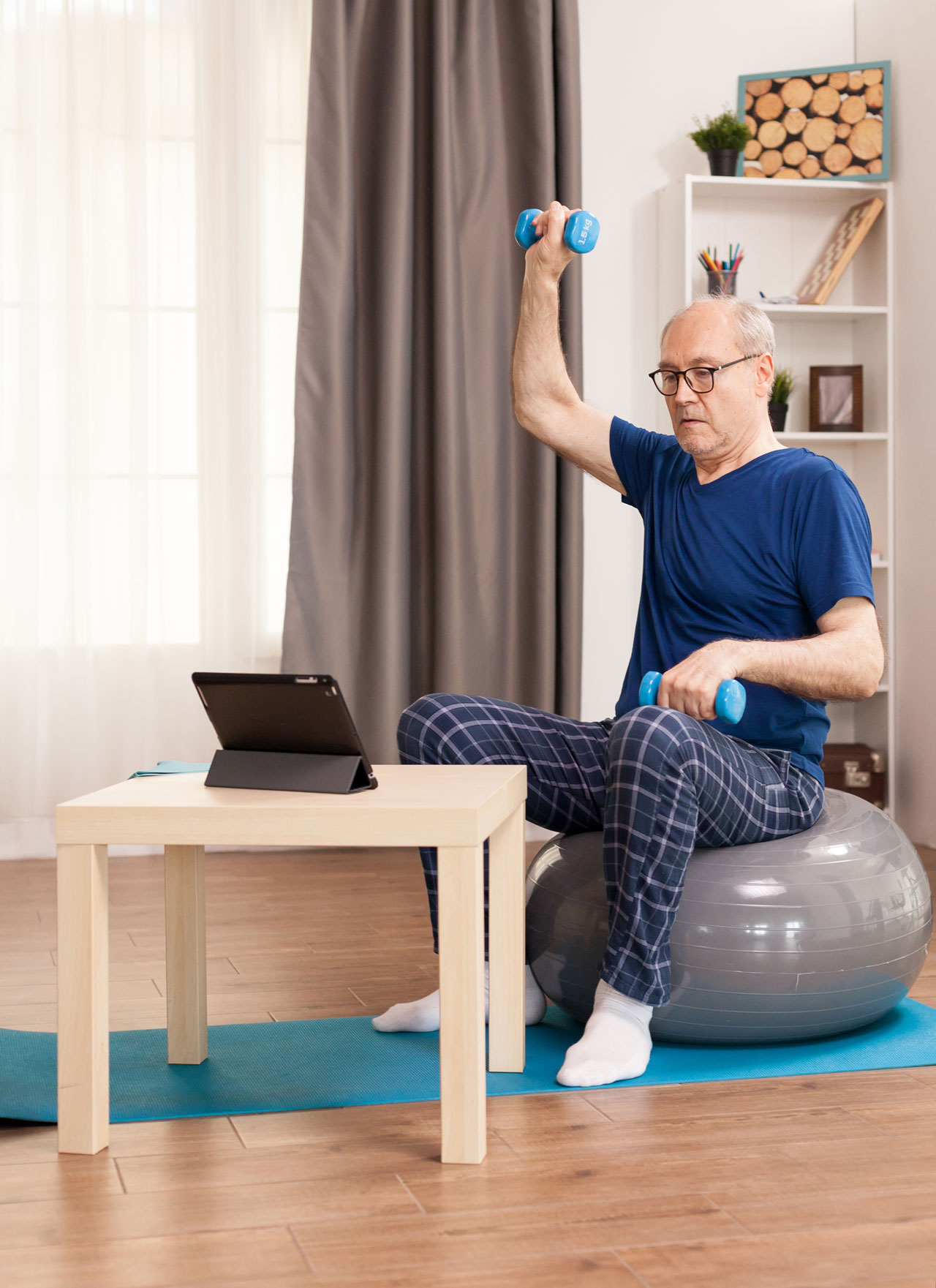
Low-impact HIIT uses short bursts of effort paired with controlled rest. Even without jumping, your body works hard because the movements use large muscle groups. This helps you burn calories, improve mobility, and build strength at the same time.

Hybrid fitness blends strength and endurance, giving you a balanced approach that supports long-term results. You move better, feel stronger, and build confidence with every session.

Low-Impact HIIT for Beginners: Burn Fat Without the Joint Pain

Benefits of a Low-Impact HIIT Workout for Beginner Levels

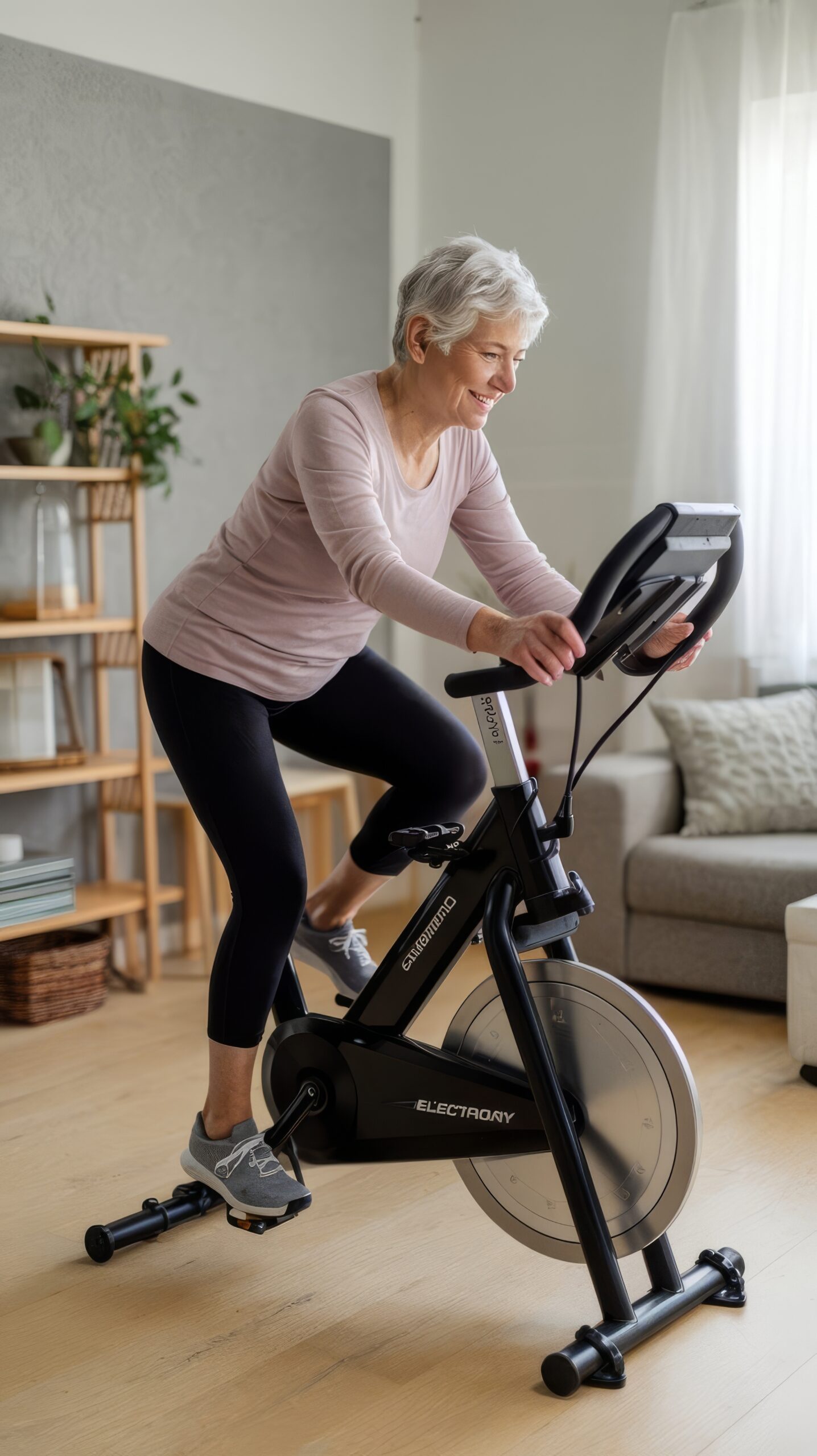
A low-impact HIIT workout for beginner athletes offers several advantages. It reduces joint stress, improves cardiovascular health, and supports fat loss without overwhelming your body. Because the movements are grounded, you can focus on form and stability. This builds a strong foundation for future training.

Additionally, low-impact HIIT is easy to modify. You can adjust tempo, resistance, or range of motion to match your fitness level. This flexibility makes it ideal for hybrid fitness training.
Low-Impact HIIT for Beginners: Burn Fat Without the Joint Pain

Hybrid Fitness: Strength + Endurance Without the Impact

Hybrid fitness combines resistance training with cardio intervals. This method helps beginners build lean muscle while improving heart health. When paired with low-impact HIIT, it becomes a powerful system that supports fat loss, mobility, and functional strength.

You avoid plateaus because each session challenges your muscles and cardiovascular system in different ways.

THE PROGRESSION MATRIX

(Beginner → Intermediate → Advanced → Elite)
Includes sets, reps, muscles, stabilizers, and full teaching cues.

  1. BEGINNER — The Foundation Builder

Definition: Individuals new to structured exercise or returning after a long break.
Characteristics: Focuses on form, mobility, and building a baseline aerobic engine.

The Routine

Bodyweight Squats (Stairs/Chair) — 3 sets of 15

Muscles: Quads, Glutes
Stabilizers: Core
Teaching Cues:

  • Stand with feet shoulder-width
  • Brace your core before moving
  • Sit your hips down and back toward the chair
  • Keep your knees tracking over your toes
  • Maintain a tall chest without rounding
  • Tap the chair lightly without collapsing
  • Drive through your heels to stand
  • Squeeze your glutes at the top
Incline Push-Ups (Desk/Wall) — 3 sets of 12

Muscles: Chest, Triceps
Stabilizers: Shoulders
Teaching Cues:

  • Place hands on a stable surface
  • Walk feet back until your body forms a straight line
  • Brace your core and lower your chest toward the surface
  • Keep elbows at a 45-degree angle
  • Press through your palms to rise
  • Maintain a long spine
  • Avoid shrugging your shoulders
  • Move with slow, controlled tempo
Banded Rows — 3 sets of 15

Muscles: Upper Back
Stabilizers: Rear Delts
Teaching Cues:

  • Anchor the band at chest height
  • Step back to create tension
  • Brace your core and soften your knees
  • Pull the band toward your ribs
  • Squeeze your shoulder blades together
  • Keep elbows close to your body
  • Control the return phase
  • Avoid shrugging
Brisk Walking — 20 minutes

Muscles: Legs
Stabilizers: Hips
Teaching Cues:

  • Walk with tall posture
  • Keep your core lightly braced
  • Swing your arms naturally
  • Maintain a steady pace
  • Land softly through your mid-foot
  • Keep shoulders relaxed
  • Breathe rhythmically
  • Avoid leaning forward
  1. INTERMEDIATE — The Performance Optimizer

Definition: Consistent for 6+ months with basic movement knowledge.
Characteristics: Uses external resistance and varied tempos.

The Routine

Goblet Squats (Dumbbell/Kettlebell) — 4 sets of 10

Muscles: Lower Body
Stabilizers: Core, Erector Spinae
Teaching Cues:

  • Hold the weight at your chest
  • Brace your core before descending
  • Sit hips down and back
  • Keep knees aligned with toes
  • Maintain tall posture
  • Drive through your heels
  • Squeeze glutes at the top
  • Avoid collapsing your chest
Dumbbell Overhead Press — 4 sets of 10

Muscles: Shoulders
Stabilizers: Core, Triceps
Teaching Cues:

  • Stand tall with dumbbells at shoulder height
  • Brace your core and keep ribs stacked
  • Press weights overhead
  • Lock out arms with control
  • Lower slowly
  • Keep shoulders down
  • Avoid arching your back
  • Maintain steady breathing
Kettlebell Swings — 3 sets of 15

Muscles: Posterior Chain
Stabilizers: Core, Grip
Teaching Cues:

  • Stand with feet slightly wider than hip-width
  • Hinge your hips back
  • Grip the kettlebell firmly
  • Drive hips forward to swing
  • Let the bell float to chest height
  • Control the downswing
  • Keep arms relaxed
  • Avoid squatting the movement
Alternating Light Jog/Walk — 25 minutes

Muscles: Full Body
Stabilizers: Ankles, Knees
Teaching Cues:

  • Jog lightly for 1 minute
  • Walk briskly for 1 minute
  • Maintain tall posture
  • Keep your core engaged
  • Land softly
  • Swing arms naturally
  • Breathe steadily
  • Avoid overstriding
  1. ADVANCED — The Hybrid Athlete

Definition: High strength and cardiovascular recovery; 2+ years of training.
Characteristics: Focuses on power, plyometrics, and high-volume endurance.

The Routine

Box Jumps — 4 sets of 8

Muscles: Quads, Glutes
Stabilizers: Calves, Core
Teaching Cues:

  • Stand with feet hip-width
  • Brace your core and load your hips
  • Swing arms and explode upward
  • Land softly with bent knees
  • Stand tall on the box
  • Step down carefully
  • Maintain tall posture
  • Avoid landing stiff-legged
Weighted Lunges — 4 sets of 12 per leg

Muscles: Legs
Stabilizers: Adductors, Glute Medius
Teaching Cues:

  • Hold dumbbells at your sides
  • Step forward into a long stance
  • Lower your back knee toward the floor
  • Keep your chest tall
  • Push through your front heel
  • Maintain hip stability
  • Return to the start
  • Switch legs with control
Renegade Rows — 4 sets of 10

Muscles: Back
Stabilizers: Core (anti-rotation), Shoulders
Teaching Cues:

  • Start in a plank with dumbbells
  • Brace your core
  • Row one dumbbell toward your ribs
  • Keep hips level
  • Lower with control
  • Switch sides
  • Maintain long spine
  • Avoid twisting
Stair Climbing (Vest Optional) — 20 minutes

Muscles: Legs/Cardio
Stabilizers: Hips
Teaching Cues:

  • Maintain tall posture
  • Step with full foot contact
  • Keep your core engaged
  • Drive through your glutes
  • Use handrails only for balance
  • Maintain steady breathing
  • Avoid leaning forward
  • Keep a consistent pace
  1. ELITE — The High-Performance Executive

Definition: Mastery of all modalities; capable of sustained high-intensity output.
Characteristics: Advanced mobility, maximum strength, and metabolic conditioning.

The Routine

Thrusters (Dumbbells) — 4 sets of 12

Muscles: Full Body
Stabilizers: Shoulders, Core, Hips
Teaching Cues:

  • Hold dumbbells at shoulder height
  • Squat down with tall posture
  • Drive upward through your heels
  • Press weights overhead
  • Lock out arms with control
  • Lower weights back to shoulders
  • Maintain smooth rhythm
  • Avoid arching your back
Burpees to Box Jump — 4 sets of 10

Muscles: Full Body
Stabilizers: Entire System
Teaching Cues:

  • Step or hop into a plank
  • Lower chest with control
  • Step or hop forward
  • Jump onto the box
  • Land softly
  • Stand tall
  • Step down carefully
  • Maintain steady breathing
Kettlebell Clean & Press — 4 sets of 10

Muscles: Back, Shoulders
Stabilizers: Core, Forearms
Teaching Cues:

  • Start with the bell between your feet
  • Hinge your hips and grip the handle
  • Drive upward to clean the bell
  • Keep your wrist neutral
  • Press overhead with control
  • Lower safely
  • Maintain tall posture
  • Avoid leaning back
Hill Sprints or High-Pace Run — 30 minutes

Muscles: Legs
Stabilizers: Core, Ankles
Teaching Cues:

  • Lean slightly forward
  • Drive knees upward
  • Pump arms powerfully
  • Land softly
  • Maintain strong posture
  • Breathe rhythmically
  • Keep strides short
  • Avoid overreaching

CTAs

Read next: Low-Impact Strength Training: A Guide for Beginners

Also explore: Strength Training Mistakes: 7 Survival Tips for Beginners Over 40

Summary

Low-impact HIIT is one of the safest and most effective ways for beginners to burn fat without stressing their joints. It blends strength and cardio in a way that supports long-term progress. Because the movements are grounded, you can train consistently without worrying about pain or impact.

This approach also fits perfectly into hybrid fitness. You build strength, improve endurance, and develop better movement patterns all at once. As you progress through the matrix, your body adapts and becomes

With the right structure, low-impact HIIT becomes a sustainable lifestyle. You gain confidence, improve mobility, and build a foundation that supports more advanced training later. Most importantly, you learn how to train smarter, not harder.

FAQs

  1. Is low-impact HIIT effective for fat loss?
    Yes. It raises your heart rate quickly while protecting your joints, making it ideal for beginners.
  2. How often should beginners do low-impact HIIT?
    Two to three sessions per week is enough to see progress without overtraining.
  3. Can I build muscle with low-impact HIIT?
    Absolutely. When paired with resistance training, it supports hybrid fitness goals.
  4. Do I need equipment to start?
    No. Bodyweight movements work well, though bands and dumbbells add variety.
  5. How long should each session be?
    Most beginners benefit from 15–25 minutes of structured intervals.
Peer-Reviewed References
Disclosure

This content is for educational purposes only and is not a substitute for professional medical advice. Always consult your physician before starting any exercise program.

Smart tools, human guidance — straightforward, simple, effective, and fun.

 

How Low-Impact HIIT Helps You Burn Fat Without Joint Stress

Low-Impact HIIT for Beginners: Starting a low-impact HIIT workout is one of the safest ways to burn fat without stressing your joints. Many new exercisers want results but feel intimidated by high-impact moves like jump squats or burpees. This guide breaks everything down into simple steps so you can build strength, improve endurance, and stay consistent without pain.

Low-impact HIIT still delivers intensity. However, it keeps your feet grounded, which reduces joint stress while still elevating your heart rate. Because of this, beginners can train confidently and build a strong foundation for future progress.

Low-Impact HIIT for Beginners: Burn Fat Without the Joint Pain


Why Low-Impact HIIT Works for Beginners

Low-impact HIIT uses short bursts of effort paired with controlled rest. Even without jumping, your body works hard because the movements use large muscle groups. This helps you burn calories, improve mobility, and build strength at the same time.

Hybrid fitness blends strength and endurance, giving you a balanced approach that supports long-term results. You move better, feel stronger, and build confidence with every session.

Low-Impact HIIT for Beginners: Burn Fat Without the Joint Pain

Benefits of a Low-Impact HIIT Workout for Beginner Levels

A low-impact HIIT workout for beginner athletes offers several advantages. It reduces joint stress, improves cardiovascular health, and supports fat loss without overwhelming your body. Because the movements are grounded, you can focus on form and stability. This builds a strong foundation for future training.

Additionally, low-impact HIIT is easy to modify. You can adjust tempo, resistance, or range of motion to match your fitness level. This flexibility makes it ideal for hybrid fitness training.

Low-Impact HIIT for Beginners: Burn Fat Without the Joint Pain

Hybrid Fitness: Strength + Endurance Without the Impact

Hybrid fitness combines resistance training with cardio intervals. This method helps beginners build lean muscle while improving heart health. When paired with low-impact HIIT, it becomes a powerful system that supports fat loss, mobility, and functional strength.

You avoid plateaus because each session challenges your muscles and cardiovascular system in different ways.

THE PROGRESSION MATRIX

(Beginner → Intermediate → Advanced → Elite)
Includes sets, reps, muscles, stabilizers, and full teaching cues.

  1. BEGINNER — The Foundation Builder

Definition: Individuals new to structured exercise or returning after a long break.
Characteristics: Focuses on form, mobility, and building a baseline aerobic engine.

The Routine

Bodyweight Squats (Stairs/Chair) — 3 sets of 15

Muscles: Quads, Glutes
Stabilizers: Core
Teaching Cues:

  • Stand with feet shoulder-width
  • Brace your core before moving
  • Sit your hips down and back toward the chair
  • Keep your knees tracking over your toes
  • Maintain a tall chest without rounding
  • Tap the chair lightly without collapsing
  • Drive through your heels to stand
  • Squeeze your glutes at the top
Incline Push-Ups (Desk/Wall) — 3 sets of 12

Muscles: Chest, Triceps
Stabilizers: Shoulders
Teaching Cues:

  • Place hands on a stable surface
  • Walk feet back until your body forms a straight line
  • Brace your core and lower your chest toward the surface
  • Keep elbows at a 45-degree angle
  • Press through your palms to rise
  • Maintain a long spine
  • Avoid shrugging your shoulders
  • Move with slow, controlled tempo
Banded Rows — 3 sets of 15

Muscles: Upper Back
Stabilizers: Rear Delts
Teaching Cues:

  • Anchor the band at chest height
  • Step back to create tension
  • Brace your core and soften your knees
  • Pull the band toward your ribs
  • Squeeze your shoulder blades together
  • Keep elbows close to your body
  • Control the return phase
  • Avoid shrugging
Brisk Walking — 20 minutes

Muscles: Legs
Stabilizers: Hips
Teaching Cues:

  • Walk with tall posture
  • Keep your core lightly braced
  • Swing your arms naturally
  • Maintain a steady pace
  • Land softly through your mid-foot
  • Keep shoulders relaxed
  • Breathe rhythmically
  • Avoid leaning forward
  1. INTERMEDIATE — The Performance Optimizer

Definition: Consistent for 6+ months with basic movement knowledge.
Characteristics: Uses external resistance and varied tempos.

The Routine

Goblet Squats (Dumbbell/Kettlebell) — 4 sets of 10

Muscles: Lower Body
Stabilizers: Core, Erector Spinae
Teaching Cues:

  • Hold the weight at your chest
  • Brace your core before descending
  • Sit hips down and back
  • Keep knees aligned with toes
  • Maintain tall posture
  • Drive through your heels
  • Squeeze glutes at the top
  • Avoid collapsing your chest
Dumbbell Overhead Press — 4 sets of 10

Muscles: Shoulders
Stabilizers: Core, Triceps
Teaching Cues:

  • Stand tall with dumbbells at shoulder height
  • Brace your core and keep ribs stacked
  • Press weights overhead
  • Lock out arms with control
  • Lower slowly
  • Keep shoulders down
  • Avoid arching your back
  • Maintain steady breathing
Kettlebell Swings — 3 sets of 15

Muscles: Posterior Chain
Stabilizers: Core, Grip
Teaching Cues:

  • Stand with feet slightly wider than hip-width
  • Hinge your hips back
  • Grip the kettlebell firmly
  • Drive hips forward to swing
  • Let the bell float to chest height
  • Control the downswing
  • Keep arms relaxed
  • Avoid squatting the movement
Alternating Light Jog/Walk — 25 minutes

Muscles: Full Body
Stabilizers: Ankles, Knees
Teaching Cues:

  • Jog lightly for 1 minute
  • Walk briskly for 1 minute
  • Maintain tall posture
  • Keep your core engaged
  • Land softly
  • Swing arms naturally
  • Breathe steadily
  • Avoid overstriding
  1. ADVANCED — The Hybrid Athlete

Definition: High strength and cardiovascular recovery; 2+ years of training.
Characteristics: Focuses on power, plyometrics, and high-volume endurance.

The Routine

Box Jumps — 4 sets of 8

Muscles: Quads, Glutes
Stabilizers: Calves, Core
Teaching Cues:

  • Stand with feet hip-width
  • Brace your core and load your hips
  • Swing arms and explode upward
  • Land softly with bent knees
  • Stand tall on the box
  • Step down carefully
  • Maintain tall posture
  • Avoid landing stiff-legged
Weighted Lunges — 4 sets of 12 per leg

Muscles: Legs
Stabilizers: Adductors, Glute Medius
Teaching Cues:

  • Hold dumbbells at your sides
  • Step forward into a long stance
  • Lower your back knee toward the floor
  • Keep your chest tall
  • Push through your front heel
  • Maintain hip stability
  • Return to the start
  • Switch legs with control
Renegade Rows — 4 sets of 10

Muscles: Back
Stabilizers: Core (anti-rotation), Shoulders
Teaching Cues:

  • Start in a plank with dumbbells
  • Brace your core
  • Row one dumbbell toward your ribs
  • Keep hips level
  • Lower with control
  • Switch sides
  • Maintain long spine
  • Avoid twisting
Stair Climbing (Vest Optional) — 20 minutes

Muscles: Legs/Cardio
Stabilizers: Hips
Teaching Cues:

  • Maintain tall posture
  • Step with full foot contact
  • Keep your core engaged
  • Drive through your glutes
  • Use handrails only for balance
  • Maintain steady breathing
  • Avoid leaning forward
  • Keep a consistent pace
  1. ELITE — The High-Performance Executive

Definition: Mastery of all modalities; capable of sustained high-intensity output.
Characteristics: Advanced mobility, maximum strength, and metabolic conditioning.

The Routine

Thrusters (Dumbbells) — 4 sets of 12

Muscles: Full Body
Stabilizers: Shoulders, Core, Hips
Teaching Cues:

  • Hold dumbbells at shoulder height
  • Squat down with tall posture
  • Drive upward through your heels
  • Press weights overhead
  • Lock out arms with control
  • Lower weights back to shoulders
  • Maintain smooth rhythm
  • Avoid arching your back
Burpees to Box Jump — 4 sets of 10

Muscles: Full Body
Stabilizers: Entire System
Teaching Cues:

  • Step or hop into a plank
  • Lower chest with control
  • Step or hop forward
  • Jump onto the box
  • Land softly
  • Stand tall
  • Step down carefully
  • Maintain steady breathing
Kettlebell Clean & Press — 4 sets of 10

Muscles: Back, Shoulders
Stabilizers: Core, Forearms
Teaching Cues:

  • Start with the bell between your feet
  • Hinge your hips and grip the handle
  • Drive upward to clean the bell
  • Keep your wrist neutral
  • Press overhead with control
  • Lower safely
  • Maintain tall posture
  • Avoid leaning back
Hill Sprints or High-Pace Run — 30 minutes

Muscles: Legs
Stabilizers: Core, Ankles
Teaching Cues:

  • Lean slightly forward
  • Drive knees upward
  • Pump arms powerfully
  • Land softly
  • Maintain strong posture
  • Breathe rhythmically
  • Keep strides short
  • Avoid overreaching

CTAs

Read next: Low-Impact Strength Training: A Guide for Beginners

Also explore: Strength Training Mistakes: 7 Survival Tips for Beginners Over 40

Summary

Low-impact HIIT is one of the safest and most effective ways for beginners to burn fat without stressing their joints. It blends strength and cardio in a way that supports long-term progress. Because the movements are grounded, you can train consistently without worrying about pain or impact.

This approach also fits perfectly into hybrid fitness. You build strength, improve endurance, and develop better movement patterns all at once. As you progress through the matrix, your body adapts and becomes

With the right structure, low-impact HIIT becomes a sustainable lifestyle. You gain confidence, improve mobility, and build a foundation that supports more advanced training later. Most importantly, you learn how to train smarter, not harder.

FAQs

  1. Is low-impact HIIT effective for fat loss?
    Yes. It raises your heart rate quickly while protecting your joints, making it ideal for beginners.
  2. How often should beginners do low-impact HIIT?
    Two to three sessions per week is enough to see progress without overtraining.
  3. Can I build muscle with low-impact HIIT?
    Absolutely. When paired with resistance training, it supports hybrid fitness goals.
  4. Do I need equipment to start?
    No. Bodyweight movements work well, though bands and dumbbells add variety.
  5. How long should each session be?
    Most beginners benefit from 15–25 minutes of structured intervals.
Peer-Reviewed References
Disclosure

This content is for educational purposes only and is not a substitute for professional medical advice. Always consult your physician before starting any exercise program.

Smart tools, human guidance — straightforward, simple, effective, and fun.

 

Leave a Comment

Your email address will not be published. Required fields are marked *

Scroll to Top
Scroll to Top
Verified by MonsterInsights